

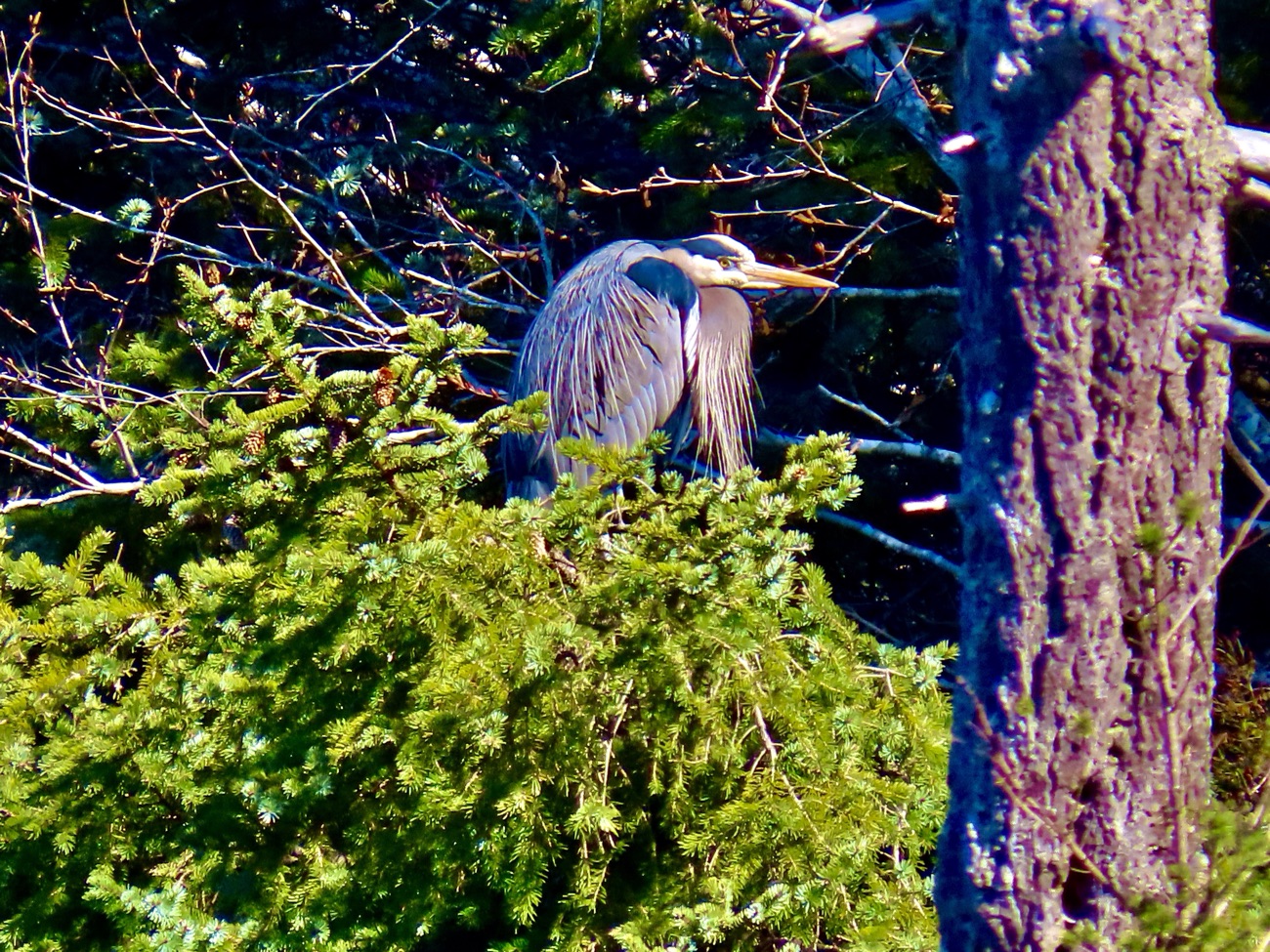
The Patient Fisher….
Vancouver Island’s sheltered waters & wetlands are fabulous to explore…. A place of year round nutrient rich foraging for hundreds of species of birds and other wildlife, including the Great Blue Heron.
Situated on the west coast of British Columbia, the Island’s shores offer a veritable smorgasbord of unpolluted crustaceans, small fish, worms, insects, seaweed greens and such; essential & favourite foods of Herons. The presence of these magnificent long legged wading birds are excellent indicators of a healthy balanced & interactive ecosystem.
Great Blue Heron BC Species
Two subspecies of Great Blue Herons actually reside in British Columbia, differing slightly in plumage tone and migratory patterns: an interior species (Ardea Herodias) and a west coast species (Ardea Herodias Fannini) known as the Pacific Great Blue Heron! In this article we’ll just speak of them as one: the Great Blue Heron.


The Great Blue Heron is perhaps the most easily recognized and iconic shore bird in British Columbia. Standing on tall stilt legs, the heron’s handsome blue grey body, bearded chest, long neck, and capped head with slender orange beak grabs your attention right away. They are the largest wading bird in North America.
Most Recognizable Shore Bird


Heron Habitat & Stealth
These patient fishers can be seen in fish bearing watercourses across Canada; an estimated 4000 to 5000 nesting adults reside in British Columbia. A protected bird, their preferred foraging habits are seashores, lakeshores, ponds, rivers, creeks, and marshes. If food sources freeze up the awesome birds will migrate south to warmer ice free wintering locations. In the Pacific Northwest’s temperate environment heron are year-around residents, much to the enjoyment of wildlife enthusiasts.


A heron silhouette often can be seen from a great distance, standing motionless for long periods, staring into water for prey, neck crooked and head slightly turned to one side, patiently waiting….. then with rapier speed the head will dart forward capturing an unwary fish, frog, or other tasty morsel with a sharp beak perfectly suited for that purpose. After swallowing the meal whole they take slow purposeful steps to the next hunting stand, without disturbing the water’s surface. Great Blue Herons hunt day and night with equal precision skill, thanks to special of rod-type photoreceptors in their eyes affording excellent night vision. They are an apex predator of smaller wetland species and aid in preventing ecological imbalances, as well their digestive processes play a crucial part in habitat nutrient cycling. Interesting stuff eh!
Great Blue Heron Can be Aggressive
Try to sneak up on this iconic bird and you will quickly find out they are wary of humans, and predatory presence…. launching into the air when approached, sometimes issuing a loud series of unnerving prehistoric like squawks. However this bird has been known to be aggressive and won’t hesitate to attack something bigger than itself. They are capable of killing a human thanks to their sharp bills.
The stealthy bird in turn is hunted by wolves, cougars, coyotes, red-tailed hawks, and bald eagles and others… If it doesn’t retreat the great heron may spreads its wings to look bigger, holding it’s dagger like beak at the ready to strike.


Heron Fun Facts
- The Great Blue Heron feed night and day, but are most active around dawn and dusk.
- The magnificent Great Blue Heron is head and shoulders above most other shore birds at over one meter tall! The only North American birds taller are the Whooping and Sandhill Cranes.
- Despite an impressive height these great birds only weigh up to about 3.6 kgs
- Great Blue Herons have a powerful 2 metre wingspan, and are amazing flyers. With beak forward and neck tucked in an S shape they fly using slow graceful wing movements… achieving speeds up to about 55 kmph.
- Males and females herons look alike, however males tend to be larger.
- Young herons have darker feathers and beaks, and as they mature greyish chest feathers will lengthen, growing continuously throughout life; adding age elegance to the heron’s appearance.
- Chest feathers are used like a washcloth, forming powder that removes fish slime and other oils from their feathers.
- Great blues fly with their legs ‘hanging” which is unique from most birds.
- They have an average lifespan of about 15 years. The oldest ever recorded was between 23 and 25 years old
- Herons sleep while standing up instead of laying down, to conserve body heat


Heron Colonies
Nest sites are chosen by males and atop high trees, usually in colonies called a rookery. A colony may consist of a few herons to hundreds! Imagine the noisy bunch. Two to five eggs are usually laid about February/April, and both parents incubate eggs, and thereafter share feeding their young. At two months old the young are able to fly to seek out their own food. Given an healthy environment they may live out a good life of fifteen or more years!


Heron Symbolism
To many indigenous first peoples the heron’s nature and presence symbolizes wisdom and good judgment. In Eastern European cultures the heron was a messenger of the gods. Other cultures attach spiritual being to this great bird reflecting stillness, abundance, opportunities, and harmony. Still, to other first peoples the Blue Heron brings messages of self-determination and self -reliance. They represent an ability to progress and evolve. The long thin legs of the heron reflect that an individual doesn’t need great massive pillars to remain stable, but must be able to stand on one’s own. Isn’t this interesting!


In summary Great Blue Herons have inspired generations of all peoples by their stilt like form, curious grace, nature, and patience. They are now Provincially protected…. a bird essential to maintaining natural ecosystem vitality and balance. While they appear especially abundant on British Columbia’s Pacific coast, population numbers as a whole are difficult for researchers to access. Still numbers have been reported as declining in some areas. These magnificent waders are sensitive to predators, human activity, foraging and nesting habitat disruptions, and industrial ecosystem pollution. The Great Blue Heron is thereby designated a vulnerable species at risk, worthy of humanity’s consideration and habitat protection.
Isn’t the Wild Kingdom fascinating.
Safe Travels, thank you Jill
Gord
Gordon F. W. Patterson
Photos © Christine Patterson