

Welcome
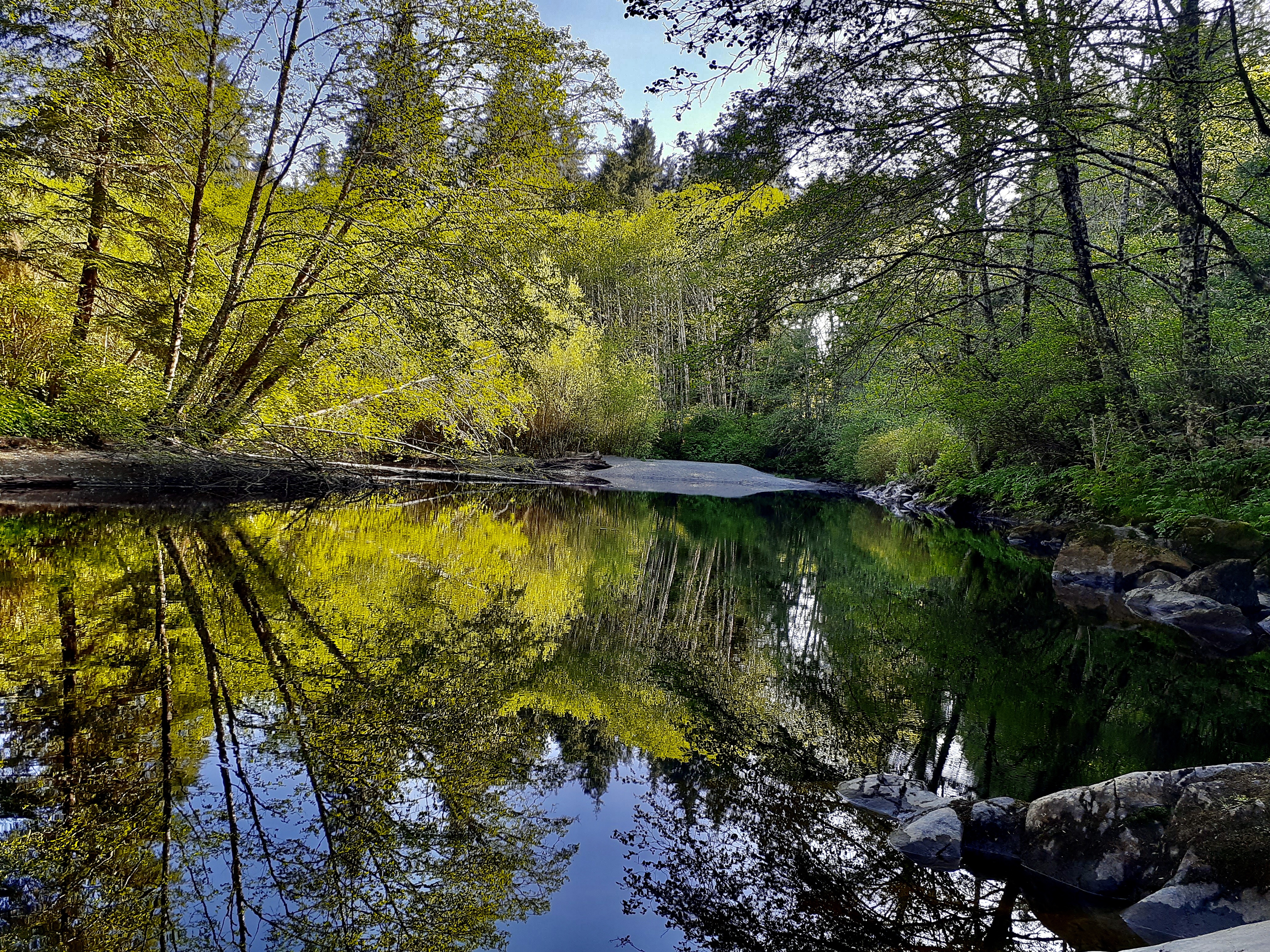
Short essays about amazing wildlife and natural habitats in rural British Columbia’s outdoors. Fireside recollections of rainforest, river, wetland & coastal ecosystems. I hope you enjoy the articles and photographs in the links below….
Safe Travels
Gordon Patterson
___________________________________________________
Journal
- Arctic Conversations
 A collection of stories barging on the Mackenzie River … a river that stretches more than 1,730 kilometres through the Northwest Territories from the Great Slave Lake to the Arctic Ocean. It is the lifeline of Canada’s North named after explorer Sir Alexander Mackenzie.
 - The White Grizzly
 We could never have imagined a day filled with a chance sighting of a white grizzly; a rare colour phenomenon that inspires awe and curiosity. Yet on this inspiring day we had the good fortune to encounter a magnificent white grizzly in a setting embraced by the fiords spectacular beauty, an event elevating our day of exploration to an amazing once-in-a-lifetime event.
 - Canada’s Largest Sitka Spruce
 An afternoon sun shone between fluffy clouds and reflected off the massive grey trunk of a giant Sitka Spruce, the warming rays illuminating the great tree’s salal, young conifers, fern, and moss-covered understory. The tranquil scene was alive with wildlife sounds the gentleness of a hidden brook, and the tap-tap-tap of a woodpecker, bore witness to the enduring presence of this ancient tree.
 - A Coastal Rainforest Giant
 The tree’s massive trunk is covered in thick gnarly brown bark… and stretches defiantly over 65 metres into a cloudless Vancouver Island morning. A broken top, a silent witness to the prosperity this ancient giant has afforded to surrounding conifers: a mix of maturing Red Cedar, Hemlock, and Sitka Spruce.
 - The Marble Maria Monument
 A search in Vancouver Island’s Nimpkish Valley for a stone and marble monument to Maria created by Italian pioneer Rufino Mancinelli. Know locally as the Marble Maria the shrine is a tale of romance and lost love. The stone memorial is about the size of a large woodshed, the work of Rufino (Manny) Mancinelli, an Italian immigrant born in Nocera Umbra, a beautiful medieval town in the middle of Italy. After serving in WW11, Rufino, full of youthful adventure, made his way to Canada in 1956, beginning a loggers life in 1957 as a welder for Canadian Forest Products, at Vancouver Island’s Nimpkish Camp at the head of Nimpkish Valley.
 - The Magic of Trout, Nature’s Living Jewels
 To many trout fishing is more than just a pastime; it is an art form, a meditative practice, and spiritual journey into the heart of nature. For centuries, anglers of all ages have felt the irresistible pull of trout waters, captivated by the beauty of these elusive fish, and drawn by the wonderful environments they inhabit.
 - A Hike to Historic San Josef Bay
 Welcoming our Netherlands friends, René and Hanny Gijsel to San Josef Bay promised to be an adventure especially during May, a time of natural flora renewal after long cold winter months… invigorating aromas, colourful vibrancy, and subtle forest sounds captures one’s auditory soul and visual imagination… San Josef Bay
 - Ronning’s Garden, A Horticulture Wonder
 It is easy to describe my serene feelings of peace and tranquillity while exploring North Vancouver Island’s rainforest hide-a-ways. Today’s adventure is no exception and takes us to Ronning’s Garden situated on the old Wagon Road to San Josef’s Bay on northern Vancouver Island. The gardens are an amazing haven for the soul, a collection of European, Japanese, and North American ornate plant life immersed in the magnificence of natural rainforest surroundings of tall native evergreens
 - A Personal Paramedical Journey
 At a colleague’s request I have attempted to put a few inspirational words together to those considering a paramedical career in British Columbia.
 - Canada a Sovereign Land
 In this article, I sway from my usual style of wildlife writing to address multiple disturbing announcements from the USA, wherein their president expresses an intention to use economic force to annex Canada as his 51st state.
 - The Fishing Lure
 An ancient Chinese philosopher Lao Tzu once stated, “Give a man a fish, and you feed him for a day. Teach him how to fish, and you feed him for a lifetime.” This sage advice, written about 500 BC, underscores the value of fostering self-reliance over providing temporary solutions
 - A Woodland Afternoon
 The air carried a pleasing sweet earthy scent, a mix of fall leaves, fir cones, moss, fungi, and ripened berries; as we quietly walked on an old gravel road unremitting forces of nature would soon reclaim. Our goal: simply to enjoy the outdoors and forest life amidst the openness of shoulder-high young rejuvenating evergreens and along nameless trails secreted under a rainforest canopy….
 - Morning Mist
 The trail was a vibrant tapestry of fallen leaves, ferns, each step releasing an earthy aroma of October’s decomposing fish and foliage. Scavenger birds flitted above the river looking for salmon carcasses, their piercing calls counterpoint to the rhythmic sounds of the flowing waters.
 - A Grizzly Bear Encounter
 The sun was high and warming to the grizzly bear as he moved slowly down a narrow path.. He was heading towards a grassy estuary, a favourite summer feeding area for bears, deer, moose, ground squirrels…. But today, a primeval stirring was in the June air; an irresistible restlessness felt throughout the Wild kingdom, the mating time of the mighty Ursula Horribilis.
 - A Black Bear Photo Adventure
 This sunny warm afternoon was motivating to get out there again… to observe Black Bears in natural river surroundings, as they feed on returning Pacific Salmon. So Christine, Rosie and I hopped in our truck and drove a short distance to a remote river location we’d often visit, where bears and other usually solitary animals congregated to feed together unperturbed… We chose a discreet place off the trail having low bush natural Salal camouflage, to sit patiently awaiting “the bears” to arrive for their evening mealtime.
 - Pacific Coastal Encounters
 We awoke to a sunny morning, calm blue seas, and a few bright fluffy clouds…. a recipe for a wonderful day exploring British Columbia’s Pacific Northwest waters… So it has been for millennium. Canada’s Pacific coast has over twenty-five thousand kilometres of pristine possibilities to enjoy…. steeped in history, and dotted with villages, bays, fiords, coves, and barnacle encrusted wave swept prominences. Rugged rocky shores offset by stretches of sandy beaches, inspiring to generations of peoples.
 - Coastal Rainforests of British Columbia
 BC’s Coastal Rainforests are a living, breathing, and interdependent synergy of ecosystem components, coexisting in balance with each other. Collectively they are self perpetuating biosphere of tall trees, plants, wildlife, reptiles, and many other organisms found along coastal British Columbia. Forest ground cover includes decaying matter that continuously supports soil nutrient input and replenishment. Optimal rainfall and moderate temperatures give rise to explosions of bioprocesses: understory plant life, colourful plant like structures that grow on other plants, ferns, mosses, fungi, and lichen… subjects of previous articles. Interestingly fifty percent (50%) of “North America’s temperate rainforests” are in British Columbia! Yet, the area of a temperate rainforest only represents 1.8% of Canada’s total forest area!
 - The Pacific Great Blue Heron
 The Great Blue Heron is perhaps the most easily recognized and iconic shore bird in British Columbia. Standing on tall stilt legs, the heron’s handsome blue grey body, bearded chest, long neck, and capped head with slender orange beak grabs your attention right away. They are the largest wading bird in North America.
 - Woodland Lichen
 The diversity of vegetation in British Columbia’s Rainforest is amazing, especially in the cool humid environment of North Vancouver Island’s coastal forests. During snow free seasons, hikers are rewarded by volumes of lush foliage sporting unique shapes and designs, scattered between tall evergreens….. Wonderful flora pleasing to the eye with exciting shades of green and brown: light, dark, vibrant or soothing pastels… And amongst woodland greenery are curious plant-like organisms called lichen; one of the most poorly understood flora of the forest macro world! Scientists (lichenologists) are only now documenting the full context of its existence. Fascinating lichen are much more than just reindeer food.
 - Mushrooms: The Incredible World of Fungi
 Fungi has an essential role in the natural function of forest ecosystems. Wood-decaying fungi are the primary decomposers breaking down dead wood and recycling nutrients back into the soil! They are also instrumental in creating diverse wildlife habitats by softening wood to form cavities, providing shelter, and forming the base of a food chain for other organisms. This decay process contributes to nutrient cycling, carbon cycling, and the formation of canopy gaps that increase forest structural diversity. Fungi are amazing!!!
 - The Nimpkish Valley
 The Nimpkish Valley links the west and east coasts of Vancouver Island and in ancient times served as an important First Nation commerce route via waterways and forest pathways. Such routes were commonly called “grease trails” because of first peoples trade in oolichan grease, a much sought after commodity. The Valley’s westward trails were used as gateways to other villages, to barter the grease and other items. Oolichan or eulachon grease is semi-solid with a texture like soft butter. Recognizing health benefits it was widely used by first people when cooking. Alert Bay Namgis canoed from Cormorant Island to Valley trails to access trade with Vancouver Island’s Pacific west coast peoples. It was an arduous overland route in the early roadless days, but saved them from making a more treacherous ocean canoe voyage around the tip Vancouver Island’s Cape Scott.
 - Canada’s Bald Eagle
 The Bald Eagle (Haliaeetus leucocephalus) is actually a subspecies of Eurasia’s Sea Eagle, and prefers to home around water; rivers, lakes, and ocean environments with an ample supply of their main food…. fish. Bald Eagles will also prey on small animals and indeed scavenge on fish carcasses and other carrion. They are at the top of their food chain, fearless and determined! They will dive with their yellow feet and sharp talons targeted towards their quarry… and with incredible agility will snatch a fish from the water’s surface leaving only droplets behind…. The eagle’s powerful two metre wings carry away prey weighing as much as 3 -4 kgs or more.
 - September in the Tlakwa
 September is mating season when massive heavy antlered male elk (bulls) are on the move, seeking slender females (cows) to start a new generation. Like clockwork as soon as leaves start to turn yellow and shades of brown, elk begin their annual hormone driven mating (rutting) season. Male animals become solitary and roam & bugle an unmistakable high pitched sound or squealing perhaps ending in a grunt to attract mates. A sound nature has purposed to demonstrate a bull’s fitness and dominance, to attract a harem of up to twenty or more cows!!
 - A Vancouver Island Morning
 Went beach combing this clear brisk January morning with Rosie my Australian Shepherd and thought: “what a magical place Vancouver Island is!” A veritable treasure chest of breathtaking beauty tucked away on an Island 460 km long and 100 km wide… Lush green rainforests, spectacular wildlife, white snowcapped mountains, glaciers, rivers and estuaries all enveloped by 3400 km of rugged blue coastline splendour.
 - Lake Surprises
 A stillness laid upon the lake, creating magical reflections of snow capped Insular Mountain prominences, exacting in every detail right down to fluffy white clouds. Perfect conditions for the kayaking & wildlife viewing we hoped to do. (Who could have imagined the wonderful fortune nature would bestow upon us today?) Magnificent Roosevelt Elk.
 - Douglas-Fir Flowers
 Spring is a renewal time for Mother Nature, especially visible in the Pacific Northwest outdoors, we knew this and why we were out and about. Still, can you imagine our amazement happening upon a fabulous and unexpected curiosity: a “flowering evergreen tree”! We had no idea such flowers existed, yet here before us was a 6 metre conifer, the top covered in 5 cm upright magenta coloured flowers. We were equally amazed the tree was unmistakably a Douglas-Fir!.
 - Turkey Vultures – Flying Environmentalists
 We could see glimpses of the lake through a screen of Hemlock firs before we broke silently into the headwaters of our destination…. To our surprise a “committee” of a six medium sized brown birds greeted us, roosting along the edge of this remote lakeside bushed area. From a distance they looked like immature eagles, then as we edged closer, the identity became wonderfully apparent…. Turkey Vultures, a lanky brown bird weighing about 1.5 Kgs which is surprising for their 3/4 meter height. They have a wing span of about 1.8 meters). Particularly noticeable are small featherless red head & upper neck, and thin white chicken like featherless legs.
 - A Short Day on the Trail
 Leave pavement behind and Nature miraculously appears… everywhere to the fortunate, affording many reasons to put on wool socks & hiking boots. Perhaps a Pine Marten, a Black Tailed Deer, a Barred Owl… So many possibilities fill our imaginations as Rosie, Chris, and I ready a daypack for a days adventure. So it has been since my life began.
 - Wool Pants & Suspenders
 Yes I replied… wilderness camping allows me throw away professional complexity and scars of emergency care by connecting with nature in wonderful natural environments… When a need to sooth a restless mind arises I simply put on “wool pants and suspenders and get out there” into comforting serenity.
 - The Quatse River
 Nestled in the Pacific’s coastal paradise of beautiful North Vancouver Island, Kwakiutl traditional territory, is a small but mighty Quatse River system. It is made huge by an amazing diversity of plant, trees, fish, animal, and bird life found in the river and along its shores. This magnificent river is a glistening jewel in British Columbia’s wild kingdom.
 - Visitors to Hardy Bay
 On this day winds were calm, sunshine high, a misty blue haze, and an outgoing tide offering a clear view of a multitude of fascinating shorebirds, foraging in Hardy Bay’s nutrient rich tidal pools. One’s imaginations is easily captured by a chorus of seabird sounds: Turnstones, sandpipers, seagulls, mews, plovers, loons, ducks, grebes, crows, ravens, and eagles chattering it up. Many different species harmoniously mingle together eating breakfast consisting of crustaceans, small fishes, seaweed. An amazement right here for all to see on this bit of North Vancouver Island paradise, under this morning’s clear azure skies of Canada’s Pacific Flyway.
 - Nature’s Rare Hair Ice
 Along side the Quatse River we noticed numerous small tennis ball sized white wavy beard like formations… attached to bark-less alder branch debris. On closer inspection these were fragile curly hair structures…. spectacular “Hair Ice” find! Touch them and they would melt and fall apart.
 - Suquash Shore
 Our plans are to explore a remote beach area at an old mine site this afternoon…. driving to a coastal location well known for it’s abundance of shore life, including interesting weathered stone architecture of an abandoned coal mine…. Even today lumps of coal from outcroppings of seams of this black gold can be found amongst a vast array of unique shore features and geological formations. However, less visible and hidden in the ever changing landscape of time is another more significant historical value here. The seemingly lonely stretch of beach today is a place where indigenous people gathered for generations to harvest nature’s bountiful marine offerings.


