

A Testament to Love and Loss
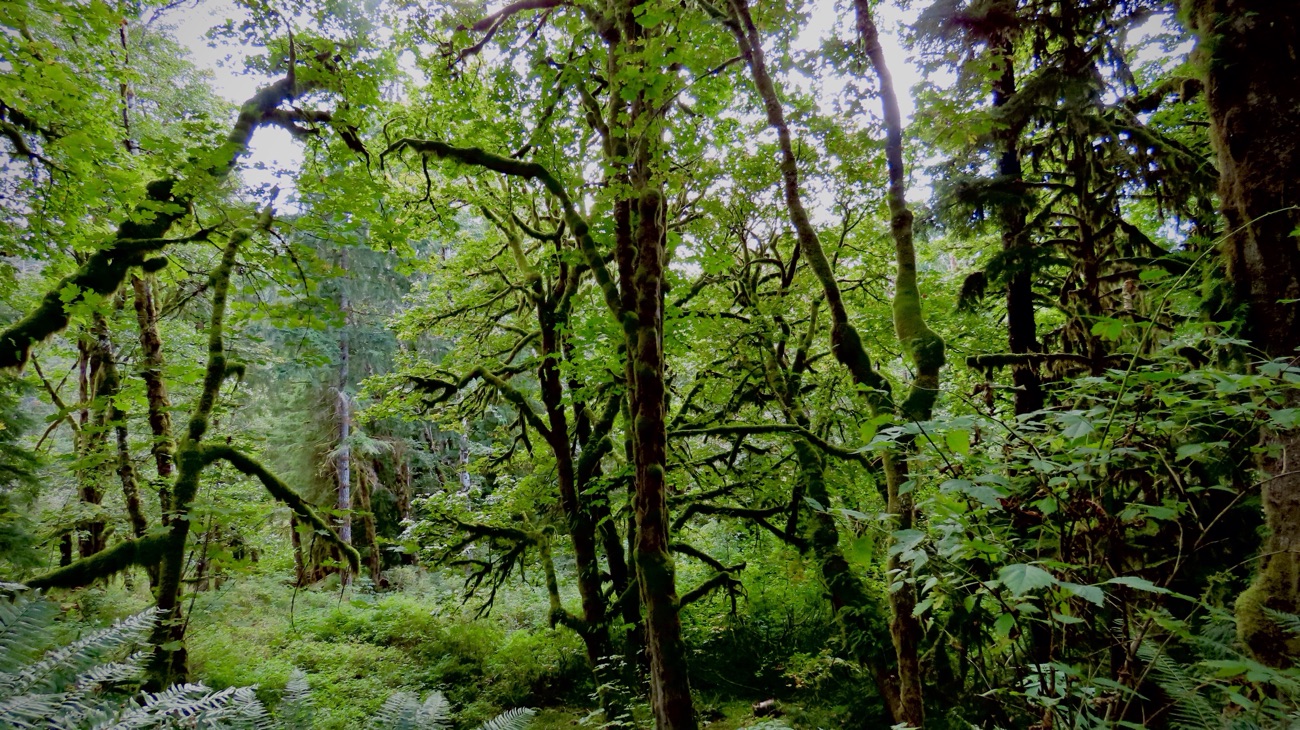
In the untamed heart of British Columbia’s Nimpkish Valley, Christine, Rosie, and I searched below the Karmutzen Mountain Range. An afternoon sunlight filtered through lush branches heavily laden with moist moss and lichen; the September colours a thrilling contrast of vibrant greens, amidst an ever changing rainforest palette. We were looking for an extraordinary stone and cement monument to romance we’d heard tales about.
The shrine we were told was now hidden by nature’s relentless hand, yet its form and structure still an enduring testament to love, longing, and the immigrant experience in early British Columbia logging camps. Fortune in our favour, we happened upon this amazing North Vancouver Island treasure.


The stone memorial is about the size of a large woodshed, the work of Rufino (Manny) Mancinelli, an Italian immigrant born in Nocera Umbra, a beautiful medieval town in the middle of Italy. After serving in WW11, Rufino, full of youthful adventure, made his way to Canada in 1956. He began a loggers life in 1957 working as a welder for Canadian Forest Products, at Vancouver Island’s Nimpkish Camp, located in the Nimpkish Valley. A well liked character, he was known as a hard worker, welder, sculptor, camp barber, and general all around handyman; sending money home to Italy, to fulfill a life desire to bring the love Maria, to Canada. Was Maria and Rufino married, who knows, however Rufino apparently had two sons, one is said to have become an engineer and the other a physician.


The story of Rufino (Manny) and Maria is one of hope and heartbreak. After years apart, she was about to immigrate to British Columbia from Italy embarking on exciting new beginnings with Rufino on North Vancouver Island. Tragically, fate intervened, Maria passed away before they could be reunited on Canadian soil. Thereafter with ingenuity, a vision, and home made tools, Mancinelli consoled his sadness by creating a lasting monument in the splendour of Nimpkish Valley, dedicated to the woman he loved…. Constructed from stone, marble, and cement of the valley itself, the alcove has 1974 engraved below the Maria’s name. George Lapore, a welding shop coworker, was said to have poured the cement finishing work around the perimeter of the stonework. Smooth steps that retain a new pristine look to this day.
One can only imagine what Rufino had in mind when meticulously designing a triangular stone structure surrounded by stepped perimeter walkway. What was the purpose for such a unique design…. Why a recessed top, that today serves as a planter containing a natural wild flora. Was it a base for an ornate and cultivated flower garden, perhaps a wishing well, or a grand platform for a future marble sculpture? Answers now buried in the passage of time.
What is known for certain is Rufino’s creation was a labour of love started in the late 60’s and completed over a number of years. Some speculate the monument’s facing alcove was originally intended to house a marble statuette; Rufino indeed had sculptured superb statues during his day, including a grand one (pictured below) that was donated to Port Hardy’s St. Bonaventure Catholic Church. If there was an alternative alcove design it was superseded by a carefully sculptured Madonna and Child in existence to this day… his lover’s name carved boldly below on a banner: “Maria”.

The memorial was known locally at the time as the “Marble Maria,” its creator fondly recalled as a resident of a camp that no longer exists. The remarkable fruits of his labour invoking timeless heart-felt feelings for Rufino’s love of Maria Rei. Their story resonates deeply within local community folklore. Chris and I first heard mention of this incredible monument to romance years ago from our brother-in -law, Ken Kollman, a longtime North Island logger. As a young boy Ken he recalls travelling to Nimpkish Camp bunkhouses to have Rufino, a man of many talents, cut his hair.


Ken’s dad Alan Kollman speaks fondly watching “the old Italian fella”, chipping away at a Virgin Mary statue in an obsolete locomotive cab placed behind the Nimpkish shop. Alan’s dad, shop foreman Frank Kollman, provided the work area for Rufino… a dry safe haven to craft his marble creations.
Three generations of shared recollections bring clarity to a remarkable monument as Rufino carved out a life in rugged forest industry surroundings.
Above Photo from Alan Kollman Collection
A life that forged bonds transcending nationality and backgrounds. Peoples of all cultures were united by hard work, home baking, wire rope; collectively joining hands overcoming challenges of remote living in the early days of the Nimpkish Valley logging environment.
Residents thrived developing a deep social connection to community. They worked together and played together, lending Rufino a hand to acquire and then transfer blocks of marble from nearby Bonanza Lake quarries.


Today, forest regrowth has fortunately hidden this shrine from casual viewing, enveloped by tenacious rainforest understory that dominates the Pacific Northwest. Beautifully adorned by living moss, and sided by the natural armament of sword ferns, bracken, salmon berry bushes, watched over by tall conifer and deciduous trees. Mother Nature had afforded a measure of protection from vandalism, shielding this labour of devotion from mainstream discovery and degradation. Hopefully the granite, marble, limestone structure’s legacy of pioneer passion will endure for generations to come. And to those who respectfully view this treasure nature offers the gift of quiet contemplation… and a reminder of the valley’s human stories…. tales of arrival, hope, love, success, and loss.
After retirement in the mid 1970’s Rufino is said to have embarked on a journey throughout British Columbia…. leaving the “Marble Maria” to stand watch over the Valley as a powerful symbol of passion. It speaks not only to the devotion of one man for his lost love, but also to the experiences of countless pioneers and indigenous peoples who have shaped British Columbia’s forests and communities. Though the story of Rufino and Maria is largely a fragile memory however, the presence of the monument continues to echo through the memories of those who lived and worked alongside Rufino. He is a folklore legend with a story to unfold around campfires and meeting places of North Vancouver Island.
To Chris, Rosie, and I the enduring existence of Rufino Mancinelli’s magnificent art work offers a tangible link to both personal and collective history, reminding us of the resilience and spirit of indigenous and pioneer peoples that define the Nimpkish Valley and North Vancouver Island communities. The monument quietly inspires contemplation on the lasting impact of love and community, serving as a testament to the ways in which ordinary lives and extraordinary acts become woven into the fabric of British Columbia’s cultural landscape.
We stood in quiet awe before Rufino’s Monument to Maria, absorbing its splendour in hushed reverence. Hardly a word was spoken; our silent marvel was our only tribute. When the moment passed, we retraced our steps in the same discreet manner, slipping away as softly as we had arrived, leaving no evidence of our presence behind.
Safe Travels
Gord
Photos © 2025 Christine Patterson