

BC’s Temperate Rainforest
Canada is home to countless breathtaking natural wonders. Our nation’s multiculturalism, Arctic tundra, ranch country, prairie, mountainous terrain, boreal forests, pristine lakes, rivers, wonderful first people’s culture, combine to make Canada an adventurer’s paradise. And British Columbia is home to what many consider the highlight of Canada’s wilderness adventure: the Pacific Coast Rainforest… A world renowned ecological jewel harbouring more life diversity than anywhere else in Canada… We have it all!

I was thinking about our Country’s good fortune, relaxing after a traditional outdoorsman’s dinner: Venison, mashed potatoes covered with a Chanterelle mushroom gravy, when I had an epiphany! Not a self realized ideal concerning our bountiful wild foraging mecca, rather it was a random thought…. I really didn’t know why our lush “Rainforest” existed only here in the coastal Pacific Northwest!
BC’s Coastal Rainforests are a living, breathing, and interdependent synergy of ecosystem components, coexisting in balance with each other. Collectively they are self perpetuating biosphere of tall trees, plants, wildlife, reptiles, and many other organisms found along coastal British Columbia. Forest ground cover includes decaying matter that continuously supports soil nutrient input and replenishment. Optimal rainfall and moderate temperatures give rise to explosions of bioprocesses: understory plant life, colourful plant like structures that grow on other plants, ferns, mosses, fungi, and lichen…
Interestingly fifty percent (50%) of “North America’s temperate rainforests” are in British Columbia! Yet, the area of a temperate rainforest only represents 1.8% of Canada’s total forest area!
I’ve written numerous articles about forest flora and fauna, and know something about mammoth evergreen trees…. and experienced gallons of rain while in the great outdoors, but I didn’t know what forces were in play to create British Columbia’s spectacular huge evergreen trees typical of our coastal regions… that are very different from most other Canadian forest ecology.

The Peculiarity of a British Columbia Rainforest
Curious, I asked myself…. what geographical, and environmental influences are responsible for tall grandfather trees and the lush green moss covered vibrancy unique to British Columbia’s coastal area that I love so much? So I picked out a book about rainforests containing hand written notes my daughter (who has an applied science degree in Environmental Resource Management), clandestinely slipped into my library a while back. Perhaps my clever daughter Jillian knew there would be a need to satisfy a natural curiosity thereby demonstrating a love of the outdoors is certainly a family affair. This article therefore explores with her assistance interesting ecosystem & environmental peculiarities setting Pacific Northwest’s magnificent rainforests apart from other forests.
Temperate Rainforest Ecology
Rainforests exist worldwide and are two types:
- a hot Tropical Rainforest found in equatorial regions,
- and a cool Temperate Rainforest located in temperate latitudes such as British Columbia.
These ecosystems are essential to planet and humanity’s health, and wild kingdom wellness…. Life sustaining modulation of hydrological, nitrogen, carbon cycles, and repository for known and yet undiscovered therapeutic pharmacologicals. Additionally, covering only about 10% of the world’s land surface, the rainforests scrub many atmospheric pollutants, and at the same time responsible for nearly one-third of the world’s oxygen production! One certainty breathes enriched air trekking forest lands!

Key Players Creating British Columbia Rainforests
Simply put, a rainforest exists on coastal British Columbia because conditions are right for one to flourish. To form a functional rainforest biosphere requires massive amounts of rain, and average annual temperatures approximately 4° – 12° C. Particular Pacific coastal geographical mountain features and prevailing ocean winds optimizes a nurturing environment facilitating a balanced nutrient cycle and other complex factors necessary to grow and sustain a rainforest. The Pacific Ocean, British Columbia’s temperate latitudes, and Coastal mountains are therefore the key players in the development of the Pacific Coastal Rainforest. As prevailing westerly winds travel over the Pacific ocean they picks up volumes of water, then approaching the mountainous coast are driven upward by the Western Cordillera Mountains, thereby releasing water loading as rain…. Drenching coastal regions with up to 3.5 metres of rain annually!
BC’s coastal temperate rainforest is amongst the wettest areas in the world!


Characteristics of a Temperate Rainforest
BC’s coastal rainforests are sometimes referred to as old growth, mature, ancient, or evolving rainforests (recovering from natural events or industrial deforestation). Whatever the name, temperate rainforest are always in a state of renewal and have the following characteristics:
- Tall trees of various ages form an enveloping canopy
- Humid moisture dependent lush bush and small tree flora grows under the canopy (understory)
- Shrubs, grasses, moss & moss-like ground cover including decaying vegetation matter assisted by fungi and other organisms


These characteristics, facilitated by coastal topography and climate distinguish Coastal rainforests from other Canadian forests by the form, flora & fauna, and biobiodiversity. A Pacific coastal rainforest is a dense forest consisting of tall conifers and to a lesser extent deciduous trees. Under the evergreen canopy grows a layer of lush moist flora understory. The forest ground is a mossy and fungal layer of humid decaying vegetation matter. Decay of fallen branches, leaves, needles and other forest debris is absolutely essential to the biosphere health and balance.

The Importance of a Rainforest Canopy
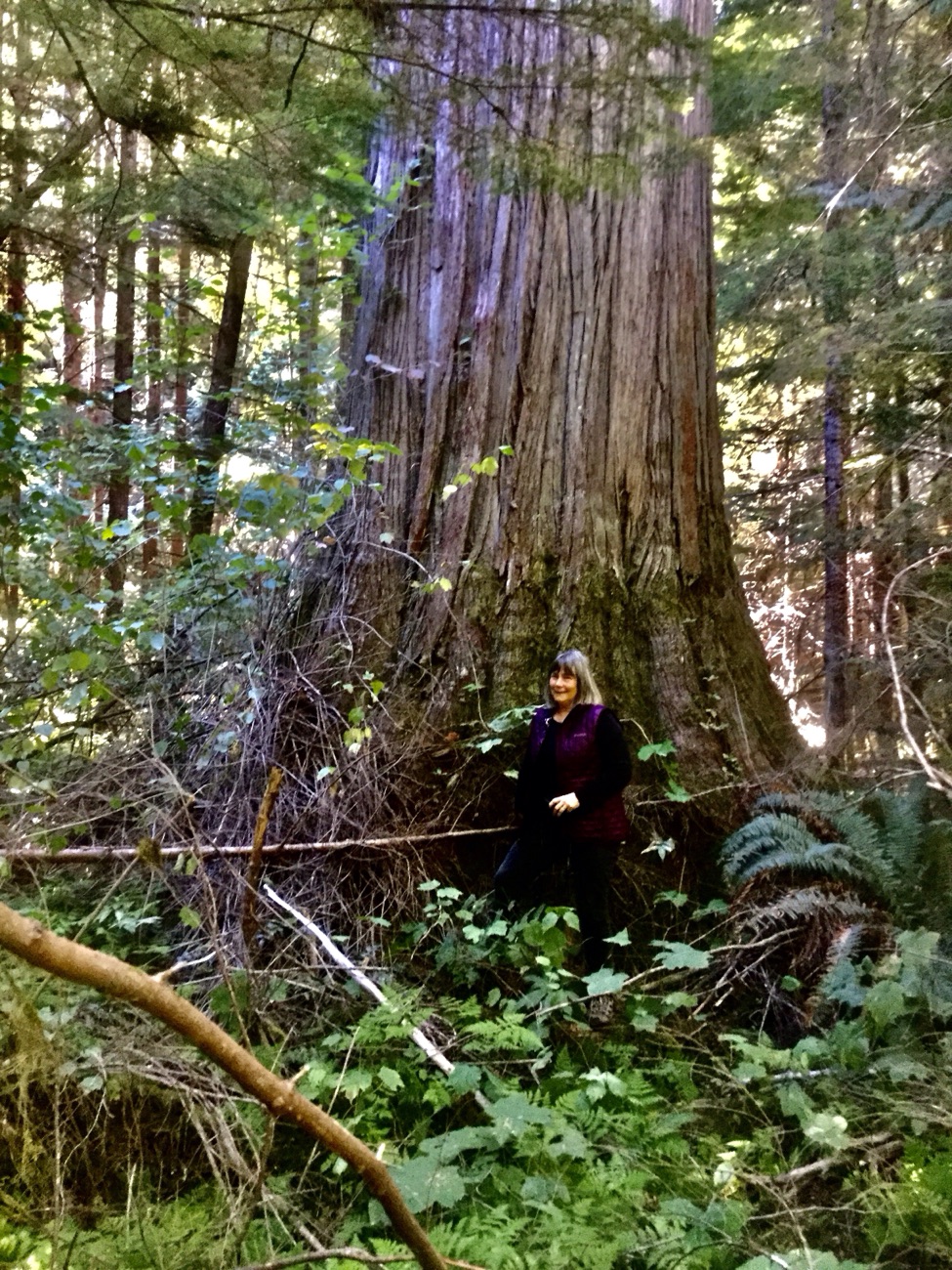
The canopy is dominated by tall evergreens that may be hundreds of years old, predominantly Sitka Spruce, Western Red Cedar, Douglas-Fir, and Western Hemlock conifers. Sitka spruce can grow to 100 meters tall, with a trunk having a diameter that can exceed 5 m. It is by far the largest species of spruce and the fifth-largest conifer in the world, and the third tallest tree species. The Hemlock fir typically grows to 70 metres tall and is long-lived at high elevations. Western hemlock is one of the most common and important timber species of Pacific North America. The Western Red Cedar is a medium- to large-sized rarely greater than 60 m and often produces a forked top. Coastal Douglas-fir may reach 80 m tall, though maximum heights can reach well over 100 m with trunk diameters over 5 m. Douglas-fir ranks as the second tallest tree species in the world behind coastal redwood.


As the name suggests a rainforest canopy health is dependent on heavy annual rainfall and mild temperatures, unlike harsh temperature extremes of BC interior forests. Understory internal temperature control is uniquely assisted by the forests canopy, as an integral and complex participant that cools and humidifies summer temperatures and protects and wind shields in winter. The dense canopy greenery filters light, and foliage provides insulation much like a greenhouse…. Affording a stable cool humid environment all year around to moisture dependent understory vegetation….. This characteristic is not afforded by other forest types.


Most Pacific coast precipitation occurs in winter, however in addition to forest canopy insulation nature has another way of maintaining summer humidity… conifers greenery extracts water from the coastal fog, creating water droplets that fall to moisture dependent understory. This plant watering machinery affords climatic tempering optimizing growth of the lush green flora hikers and wildlife enjoy. Isn’t this interesting stuff!
Rainforest Biodiversity
The biosphere of a rainforest is much much more than big trees and rain. The biodiversity of life is so numerous that scientists are still identifying and unfolding new ecological and scientific wonders annually. In fact British Columbia’s rainforests and associated marine systems have more biodiversity and interacting ecosystems than any other area in Canada. They are an ecological treasure chest containing thousands of complex life dependant processes… The Pacific coastal rainforest contains one of the highest biomasses of anyplace on earth!
Coastal rainforest biomes includes over three hundred & fifty vertebrate species (fish, Bald eagles, owls, deer, Roosevelt elk, cougars, Black Bear, Grizzly Bears, wolverines, frogs, toads, salamanders etc), hundreds of species of understory plants (sedges, grasses, bushes, etc), dozens of tree species (conifers & deciduous), thousands of fungi, and lichens, and thousands of invertebrates and soil organisms.


Summary
British Columbia’s unique geography, temperate weather, and proximity to be Pacific Ocean fosters life approaching that found in tropical rainforests; home to iconic wildlife alongside countless bird, amphibian, and insect species. The temperate rainforest ecosystem, shaped by heavy rainfall and mild coastal climate, facilitates complex interconnections among organisms, making BC’s rainforests the most biologically rich region in Canada!
BC’s coastal rainforest is a self-sustaining biosphere containing incredibly tall old growth trees that form a canopy, a lush green understory, and nutrient replenishing decaying ground cover….. Mild coastal meditated seasonal temperatures allow the rainforest to nurture balancing ecosystems to maturity. Unique coastal geographical and ocean current peculiarities bring copious amounts of rain to the Pacific Northwest….. yes, ocean derived precipitation is a major causative factor that an amazing fifty percent of North America’s temperate rainforest grow in British Columbia!
Simply put the Pacific Ocean’s prevailing westerly winds pick up moisture from the relatively warm ocean surface. Rain saturated winds hit the coast and run into the Coastal mountain ranges and rise. The higher they get, the colder the air becomes. As air cools it becomes less able to hold the ocean water vapour. The water vapour condenses and falls as rainforest sustaining precipitation.
In answer to my dinner epiphany: the key players to the formation of British Columbia’s coastal rainforests are therefore the Pacific Ocean currents, British Columbia temperate latitude, and Coastal mountain ranges. These factors set coastal forest rain mechanisms in place very different from other forest areas in Canada, thereby facilitating and nurturing complex life dependent bioprocesses to create and maintain a temperate rainforest.
Isn’t Nature Grand…
Safe travels and thank you Jill
Gord
Photos © Christine Patterson