

The Memory of a Tree
Somewhere along the rugged sweep of Northern Vancouver Island stands an old Sitka spruce upon roots that grip earth and stone…. A weathered trunk leans slightly towards the sea. Gnarled branches bear marks of decades facing the full force of both fury and gentleness. Sitka spruce thrive along the Pacific coast, where ocean air feeds them. They are the largest spruce species on Earth, capable of reaching heights over 70 metres; and withstand horrendous northern winds because their wood bends rather than breaks.
The monarch stands exposed on the shore of a nameless bay. For a century it has witnessed everything the weather has to give: the howling, angry skies and the tender, nurturing sun that follows. No valley shelters it. No hillside protects it. The survivor faces the Pacific head‑on, season after season.


Beneath its wide arms Christine, Rosie, and I stand together quietly, letting the sound of surf and wind settle around us. Our lives, much like the old spruce, have felt both storms and sunshine, times of hardship, and moments of gentle grace. Wedged between gusts our shared thoughts and quiet words mingle with the salt air, weaving into the story of the west coast. We are not alone, we are joined by the enduring presence of this tree through cycles of challenge, sadness, joy, and renewal.
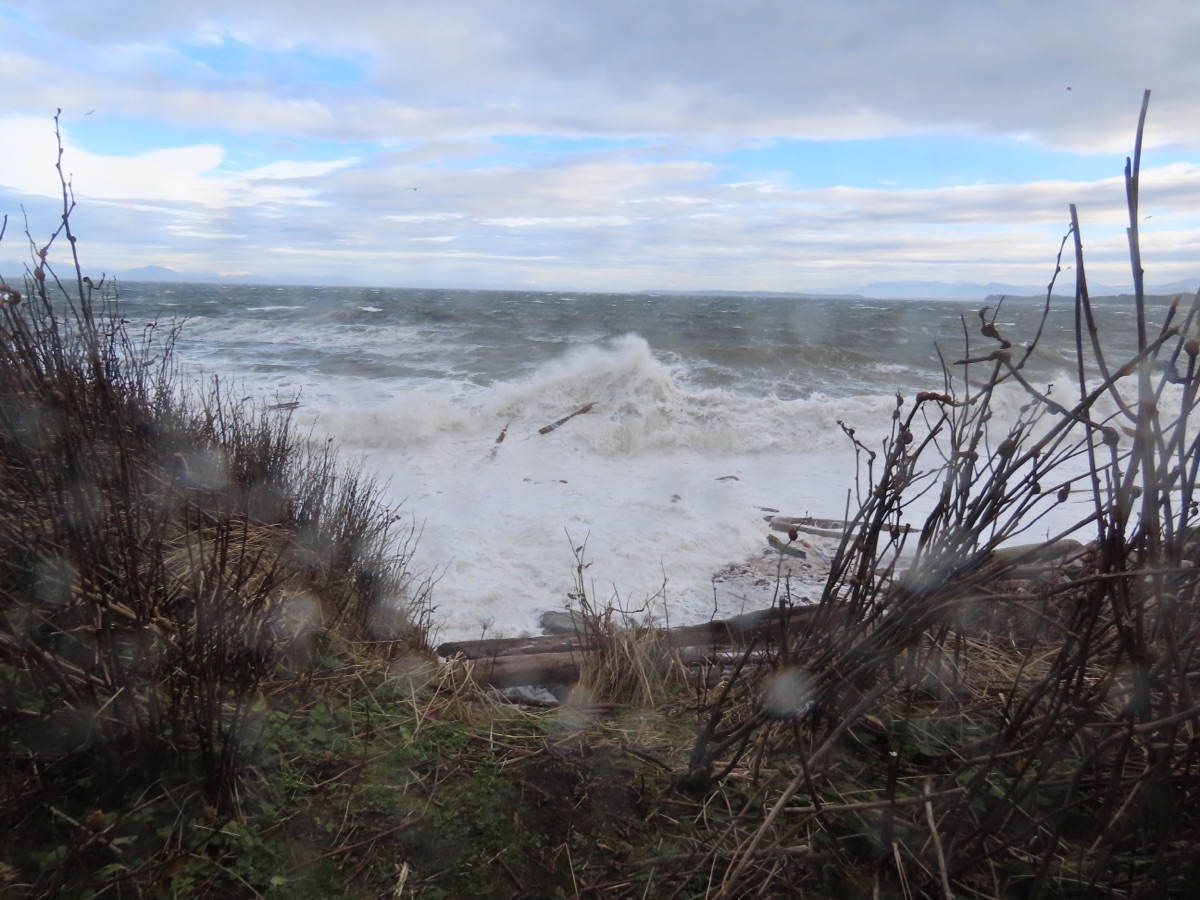
When offshore winds gather the spruce feels the tempest first as a tremor in its smaller limbs. The sky scowls as dark clouds roll in, and marine life along the coastline braces. Storms here are not timid. Winds roar in from the Pacific and down the Queen Charlotte Sound, demanding attention. Sitka spruce anchor themselves from the onslaught with wide‑spreading roots that grip rock and soil like grappling hooks. The old spruce stands ready, as it always has, offering sanctuary to others from the trial to come.

The air grows heavy, then the wind builds from a whisper to a raging chorus. Gusts lash the trunk, branches shudder and sway. Lightning fractures the sky, illuminating a momentary silhouette of the tree revealing the hundreds of stories written in its bark by past storms. Thunder follows, reverberating through the coastal forest, shaking the very foundation on which the spruce stands.
Every storm is different, each leaving an imprint. Some gusts are so violent they seem intent on tearing the spruce apart. Waves crash against rocks below, sending sprays of foam high enough to leave the crown slick with brine. But the Sitka tolerates salt better than most conifers; their needles shed salt crystals like rain. The tree fights back, tightening its root hold, trunk flexing. The bark roughens, the branches twist uttering groans of defiance; songs of courage shaped by years of steadfast perseverance.
Storms can last hours or days. Sometimes they arrive with little warning, sudden blows that test every fibre of the spruce’s being. Other times they build slowly, a relentless parade of clouds, wind, and rain, forcing the tree to adapt. It bends and sways. Most conifers would have snapped under such pressure, but not Sitka Spruce. Seasoned by dozens of winters and countless challenges, it holds its ground with fibres that are highly flexible and elastic, absorbing powerful gusts in defiance.
Angry skies bring transformation. They strip away the weak, mark the strong, and demand a memory of every ordeal. Sitka spruce can live for more than 700 years; their bark becomes a living archive of storms, salt, and time. The anger, relentless rain, and cold that settles in and refuses to leave. It wears memories openly, wounds and branches shaped by trial, and the unmistakable lean of a survivor.

Not every day is an ordeal. Some mornings the sky is clear and the ocean smooth, reflecting the sun’s soft, shimmering light. The spruce welcomes these moments, stretching its branches upward, letting warmth seep into wood and needles. Sitka spruce needles are stiff and sharp, arranged in a spiral that catches sunlight from every angle; a design perfected by centuries of coastal evolution. The air is gentle, carrying scents of kelp and ocean vitality instilling the promise of renewal in every breath. Christine, Rosie, and I relish such days standing beneath its canopy in an easy, wordless silence. The ocean settles and the world feels briefly unburdened. In those moments, we trace the lines in its bark the way one might admire the leathered face and white hair of an elder. Every line is a chapter, every blemish a reminder of storms endured and seasons survived. Beneath the spruce, we feel a quiet humility and a steady hope that comes from knowing resilience is not loud or showy. It is simply the choice to keep standing, again and again, just as the tree does.

A cleansing mist drifts in, settling quietly on the limbs, washing away salt from the last tempest. Droplets gather like tiny jewels on the tips of needles. Strings of lichen hang from the branches, pale and swaying, retelling old stories in the ocean wind. Sunlight filters through, warming rays coaxing new growth in the cradle of salal and ferns at its base. Sitka spruce host entire ecosystems in their branches; mosses, insects, ravens and other birds find refuge in the layered canopy.
When the weather calms the spruce seems to sigh with relief. Birds return, flitting from branch to branch, their calls filling the quiet. An eagle, whose nest sits anchored in the crown, glides overhead. Bald eagles often choose Sitka spruce for nesting because the trees grow tall, strong, and open‑limbed, perfect for supporting nests that can weigh hundreds of kilograms. They choose this tree not because it is perfect, but because it is proven. They know it is a haven that has withstood every test of Mother Nature.

Their massive nest, a tangle of driftwood, branches, and twigs, is woven with the confidence only eagles possess. Each year the pair returns, adding volume to the nest, raising their young where the spruce offers safety and stability.
Calm days are restorative. Rain nourishes the tree, sun strengthens it, and wisps of ocean breeze soothes it. Life returns in abundance: understory grows thick, moss creeps along the bark, insects buzz in the shade. The spruce becomes not just a survivor, but a nurturer; a silent guardian for all the wild kingdom who seek shelter in its embrace.
The contrast between angry skies and calm days defines the spruce. It is shaped as much by storms as by sunshine. Each violent night leaves a mark; each peaceful morning offers healing. The tree adapts, bending to the wind, growing stronger in the sun. It does not hide what the weather has done to it; history is written in its fibre and scars.


The Sitka is a reminder that strength is not always loud. Resilience is born of endurance and the willingness to face the wind again and again, knowing you will be changed by it, marked by it, shaped by it, but left still standing. Life at the edge is both challenging and beautiful, demanding adaptation but rewarding those who persist.
So when Christine, Rosie, and I linger beneath its green spire, we do so with amazement and gratitude. In the presence of the old spruce, the coastline feels steadier. Storms may come howling and angry, but the tree will always remember, and stand firm. And in that standing, the old soldier offers hope to all who walk these shores. A reminder that persistence shapes history, resilience can be trusted, and a rewarding life is defined by both the tempests and the calm that follows.
Safe travels,
Gord
Photos © 2026 Christine Patterson